
Illustrated Specimen Details: Denarius (Roman Empire)

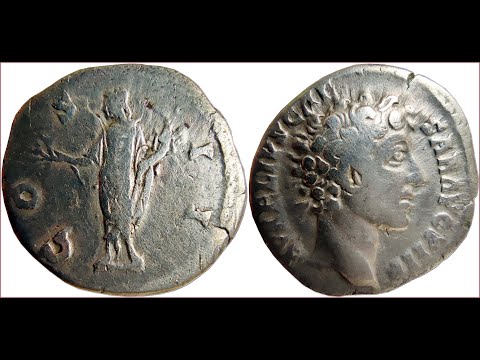
Example Specimen: Denarius, from 145 to 147 AD — Roman Empire (Marcus Aurelius as Caesar)
Ruler & Portraiture: This specimen features the young Marcus Aurelius, struck during the period when he held the title of Caesar under the emperor Antoninus Pius. Marcus Aurelius served as a Roman consul in 140, 145, and 161, eventually reigning as Emperor from 161 to 180. The obverse displays his youthful portrait with the legend AVRELIVS CAESAR AVG P II F (Aurelius Caesar Augustus Pius II Filius).
Reverse Symbolism: The reverse depicts Honos — the Roman deity personifying honor and military justice. Honos is shown holding an olive branch and a horn of plenty (Cornucopia). The inscription COS II indicates the coin was issued during Marcus Aurelius's second consulship in 145 AD.
Historical Note: Marcus Aurelius is celebrated not only as a formidable ruler but also as a profound Stoic philosopher, often referred to as "The Philosopher on the Throne".
Denomination: Denarius
Date: from 145 to 147 AD
Metal: Silver
Weight: 3.0 g | Diameter: 18 mm
Historical Rank: Caesar under Antoninus Pius
Estimated value: 12$
DENOMINATION GUIDE — WHERE & WHEN (coins catalog: by names & emitents)
- ROMAN REPUBLIC and EMPIRE (from 211 BC to 3rd century AD): 1 denarius = 4 sestertius = 16 as.
Historical Overview of the Denarius: The Silver Standard
Etymology: The origin of the name "denarius" is rooted in its initial value. In Latin, the word literally means "containing ten", as one silver denarius was originally equivalent to ten bronze asses. The Roman numeral "X" was frequently used as a mark of value on early Republican issues. Over the centuries, this name became so influential that it serves as the root for modern currencies like the dinar and denar.
The denarius was the primary silver coin of the Roman world for nearly five centuries, from its introduction in 211 BC during the Second Punic War until the mid 3rd century AD. It served as the backbone of the Mediterranean economy, facilitating trade from the borders of Scotland to the shores of the Euphrates.
The Medium of Imperial Propaganda
Beyond its economic function, the denarius was the Empire's most effective tool for communication. In an era without mass media, the reverse of a coin was used to broadcast political messages, celebrate military victories, or honor deities. With more than 70 different rulers and over 150 unique portrait subjects — including empresses and heirs — the imperial denarius series provides an unparalleled visual history of Roman leadership and artistic evolution.
Monetary Structure and the Path to Debasement
In the Roman monetary system, the denarius was the fundamental unit for taxation and military pay. A soldier's salary was calculated in denarii, emphasizing its central role. Originally a high-quality silver coin weighing approximately 4.5 grams with 95% to 98% purity, the denarius underwent a long process of debasement.
- Early Empire: Under Augustus and his successors, the weight was reduced to approximately 3.8 to 3.9 grams.
- The Severan Reform: By the late 2nd and early 3rd centuries, the silver content dropped to nearly 50%.
- Final Decline: During the Crisis of the Third Century, the purity plummeted below 20%, eventually leading to the coin's replacement by the antoninianus (double denarius).
Production and Numismatic Legacy
The scale of denarius production was staggering, with estimates suggesting hundreds of millions of coins were struck to support the Roman legions. Today, archaeological finds continue to surface across the former provinces of Italy, the United Kingdom, Germany, and the Balkans. These coins are often found in "hoards" — buried jars of money hidden during times of war or unrest.
For the modern collector, the denarius remains one of the most desirable ancient coinages. Its diversity is immense, with over 10,000 recorded varieties including official issues, contemporary counterfeits known as "fourrée" (silver-plated copper), and frontier imitations. Whether it is a portrait of Julius Caesar or the philosophical profile of Marcus Aurelius, each denarius is a tangible piece of the political and economic reality of ancient Rome.
 ▶
▶